Are AI-designed brands the future of product development?
When I first joined the private label team of a department store, I was surprised the design team would often work 12+ hour days for weeks at a time. Even though we were in NYC, where a work hard / play hard mentality permeates the city’s inhabitants, I thought these kinds of hours were reserved for my former roles in finance. But as I learned more about the product development process, I discovered that a lot of the design team’s time was allocated across two areas: researching trends and creating time-intensive tech packs.
Back then, researching trends started with a trip. The design team would travel all over the world (e.g. Europe, Japan, South Korea) to experience different cultures, shop in a variety of stores, and study what people were wearing. Combined with trend services such as WGSN, they synthesized this information into trend presentations for the season and applied it to the brand or category they were designing.
Then, they would go through the belabored process of creating tech packs (technical packages), which are multi-page documents containing technical details and specifications for a factory to turn a design into a finished garment. These typically include flat sketches and computer-aided designs (CADs), a bill of materials (BOM) or materials list including fabric, trims, accessories, and specific suppliers of these items, measurements, size charts, color palette, packaging, and labeling. With all of the details that have to be included for each item, it became obvious to me why these were so intensive to create.
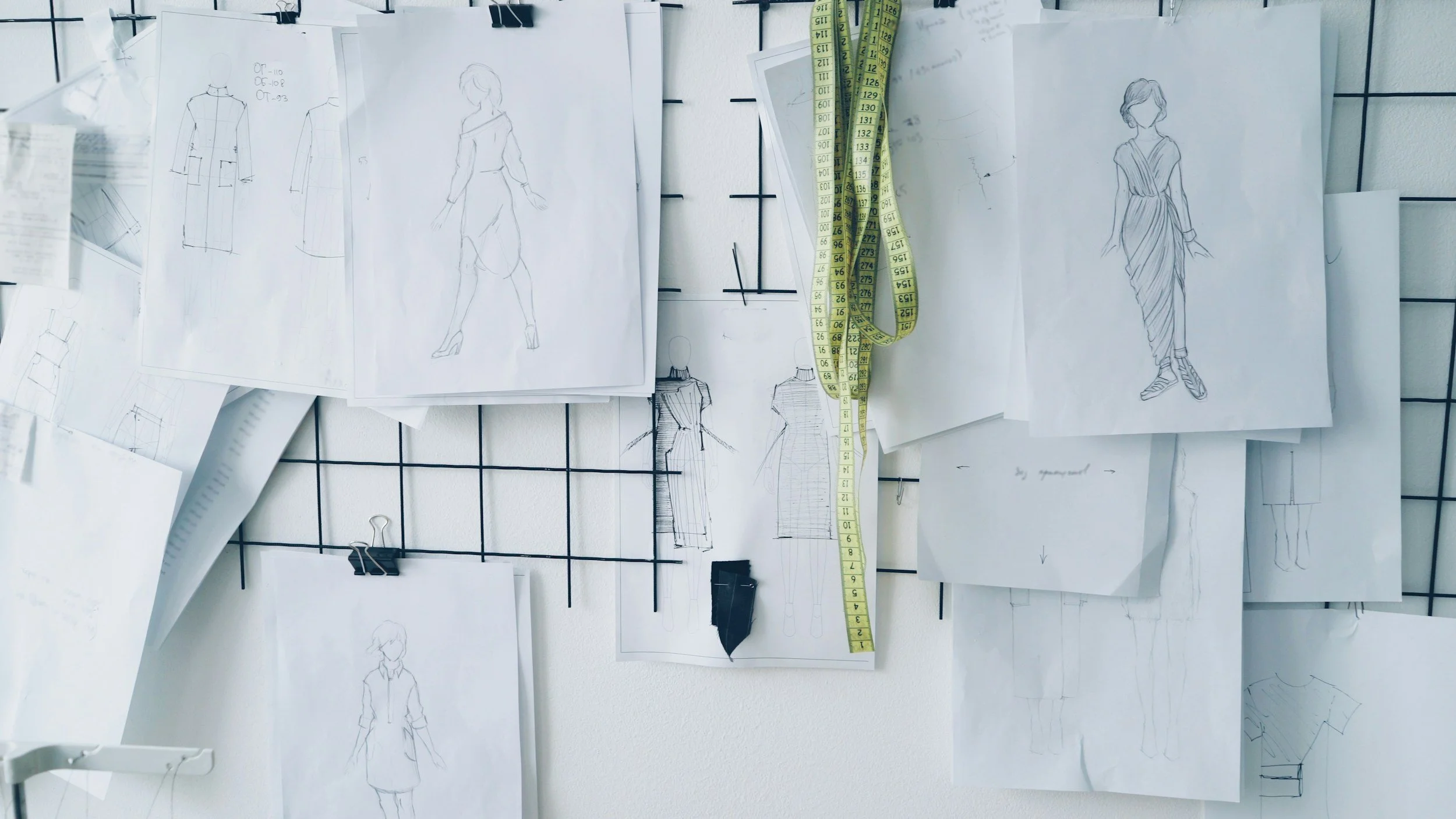
Unsplash image via @silverkblack
But the world of apparel, like so many others, has changed.
Now, the speed at which apparel collections can be developed with AI will be the differentiator that will allow new, small brands the ability to develop and test product with customers. It could also be the driver for incumbents to follow the new process or cease to exist.
What are the challenges with the product development process?
Trend researching is time intensive and expensive. Companies are always looking for ways to cut costs, and it’s hard to keep multiple trips (per season or per person) in the budget.
The underlying assumption in the product development process is that you need to provide exact specifications to the factory, or they will not be able to create the garment you envision. A designer needed to create a tech pack for every style, often 20+ per season, which often created a bottleneck in an early stage of the product development process.
Another assumption is that merchandisers need to see and feel a physical sample of the garment before they made a decision about if they wanted to buy it for their store or website. They want to touch the fabric and see the construction to help them determine consumer interest and willingness to pay. However, these multiple rounds of creating and sending samples from factories is laborious both in time and cost.
How have these challenges tried to be addressed?
The traditional approach, or sustaining innovation, has been to leverage technology to shorten the amount of time it takes to make and ship samples from overseas. Digitizing a portion of the sample process, through 3D simulation software from providers such as Clo and Browzwear, which have been around for over a decade, help companies address this challenge. One example is Walmart, which has had success integrating 3D sampling into their process and cut down on time and cost. However, the inputs into the tool and export of a tech pack follow the typical product development process.
How can we reimagine the product development process?
With AI, we can use data to build a brand. Instead of a designer, start with a data scientist or developer to determine real-time trends, top selling silhouettes, colors, and use this information along with budget parameters to build a line plan. From there, turn the line plan into 3D images of the items you want to develop, export the tech packs and send to factories to have these garments turned into physical samples.
Taking it one step further, merchandisers can decide what to purchase from the 3D models and a fabric swatch to understand how the fabric will feel. When there is trust between the brand and the merchandiser to execute the finished product with the factory to high quality standards, rounds of physical samples before production can be skipped.
One company operating in this way is Finesse. They use AI to analyze social media, search, online magazines, and forums to identify trending aesthetics and silhouettes. Then they have consumers vote on designs before production (directly validating demand, rather than going through a merchant lens). Every garment is created in 3D and they can turn around new styles in 25 days from trend identification to production.
How will this play out?
I predict AI-powered product development is a low-end disruptive innovation that incumbents will struggle to adopt within their existing organizational structure. It’s not because they are not aware of the technology, but because their resources, processes, and values are built for a different model. Low-end disruption starts with product that is “good enough” for the customers at the low end of the mainstream market, exactly the trend-sensitive, price conscious contemporary customers Finesse is targeting. The companies that survive will be those that create separate innovation efforts rather than trying to retrofit the new model into the old one.
One framework I use from Clayton Christensen, is Resources, Processes, and Values Framework (RPV).
Here’s how it looks in this case:
Resources:
A technical designer who has built tech packs for 15 years is different from a data scientist who can manipulate data and pull out top selling styles. The data scientist has a unique skillset and way of approaching a problem than the eye of a traditional apparel designer or technical designer. The pendulum has moved to the “science” side of the blend of art + science in the world of product development.
Processes:
The existing product development process is structured around checkpoints with physical samples. Tech packs are the tool used to communicate with factories to translate design into a physical product. Substituting 3D images into the process will have downstream implications from meeting cadence, approval reviews, factory communication, and buyer education.
Values:
The implicit criteria a designer or merchant uses to decide if a product is “good” enough to buy or move to production is set for the existing business model. If the merchant is used to touching the fabric and seeing the construction of a garment, making a buying decision off a 3D image violates a company’s values about what is acceptable due diligence.
Finesse has already started as an AI-native brand, and other apparel companies that are getting started now can follow their approach.
So as an established apparel vendor or retailer, what should you do?
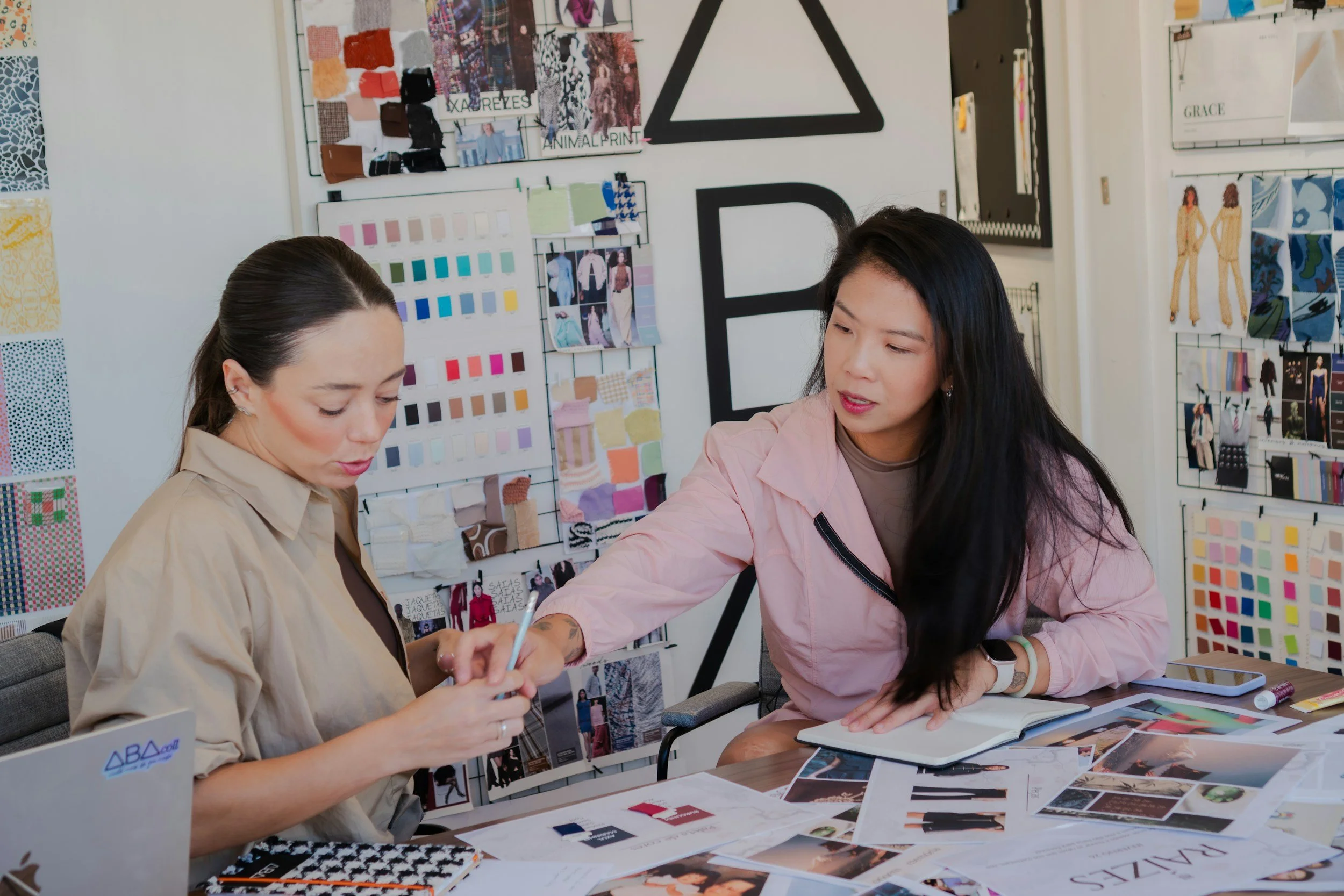
Unsplash image via @wolfart32
It will be challenging as an established company to implement an AI-native approach to product development given the existing resources, processes, and values (RPVs) of the organization are not setup to support it. Instead, they should setup a separate business unit with its own RPVs.
Per Clayton Christensen in the Innovator’s Solution, “Certain of the mainstream organization’s processes need to be pre-empted or broken because they will not facilitate the work that the disruptive team needs to do.”
Senior leadership will need to actively champion the RPVs of the separate business unit, and monitor the flow of information from the mainstream business to the separate business unit.
So what happens to the designer who was working 12+ hour days?
She doesn’t disappear, there will still be a need for her visual aesthetic, interpretation of trends, and creativity. The “human in the loop” with AI is still valuable, especially with the level of judgment and trend influence an experienced designer brings to a brand. The organizations that survive will be the ones who accept her responsibilities may shift and she may need new tools to do her job.
Ten years ago I learned the product development process followed a traditional approach structured around checkpoints for physical samples, essentially mirroring how apparel had been made in the decades prior. With the impact of technology, especially AI, I am excited to see how companies embracing these changes and reimagining how to bring product to market, setup their internal team and processes for the next era of product development.
